


Great Work Clara!
September 16, 2025
Clara Errard successfully defended her Master’s thesis in the Cell and Molecular Biology program at the University of Hawaiʻi at Mānoa. Her research focused on developing a new genome engineering approach called IASO, which uses the piggyBac transposase system in innovative ways to explore how DNA can be precisely inserted into cells.
Clara Errard successfully defended her Master’s thesis in the Cell and Molecular Biology program at the University of Hawaiʻi at Mānoa. Her research focused on developing a new genome engineering approach called IASO, which uses the piggyBac transposase system in innovative ways to explore how DNA can be precisely inserted into cells. Her work contributes to expanding the tools available for synthetic biology and gene therapy research. Clara’s project demonstrated creativity in designing non-traditional methods of integration and highlighted DNA repair pathways in these processes.
Following graduation, Clara is relocating to Washington, DC, where she is seeking opportunities to gain further clinical experience while she prepares for physician assistant school. She is excited to continue building her skills at the intersection of science and medicine and is currently awaiting admissions decisions as she takes the next steps in her career journey.
 Welcome New Students!
August 25, 2025
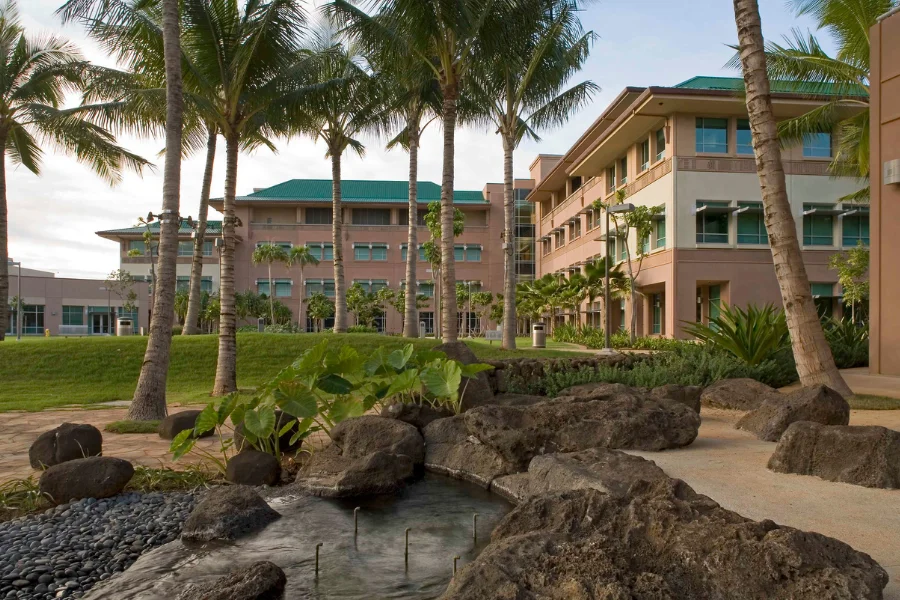
We are thrilled to welcome the new cohort of Cell and Molecular Biology graduate students! We are excited that these talented individuals chose to embark on an exciting journey of scientific discovery in our graduate program here at the John A. Burns School of Medicine.
 Welcome New Students!
We are thrilled to welcome the new cohort of Cell and Molecular Biology graduate students! We are excited that these talented individuals chose to embark on an exciting journey of scientific discovery in our graduate program here at the John A. Burns School of Medicine.
Our incoming graduate students come from diverse backgrounds, bringing with them a wealth of experiences and perspectives that will undoubtedly enrich our community. As we all know, graduate studies can be both challenging and incredibly rewarding. Let’s make sure to offer our support, guidance, and encouragement to these new students. Whether it’s sharing insights from our own research, lending a helping hand with coursework, or simply being a friendly face in the lab, every gesture counts in building a collaborative and nurturing environment.
To our new students, we encourage you to embrace the opportunities that await you. Our faculty members are internationally recognized experts in their fields, and our campus is equipped with top-notch facilities. Take full advantage of the resources available, engage in stimulating discussions, and, most importantly, don’t hesitate to ask questions – curiosity is the fuel of scientific progress. We’re excited to see the innovative research and discoveries that will emerge from your efforts.
Once again, a warm welcome to our new Cell and Molecular Biology graduate students! Here’s to a year filled with growth, collaboration, and groundbreaking achievements.
Michelle Tallquist, PhD, Professor
Cell and Molecular Biology Graduate Program Chair
 Well Done Anna Nilsson!
February 27, 2025
Cell and Molecular Biology PhD student Anna Nilsson has demonstrated great dedication and achievement in the field of cardiovascular research, recently earning four grants/fellowships in recognition of her work. She is a 4th year PhD student in the lab of Dr. Kathryn Schunke where she studies the therapeutic mechanism of a cardioprotective brain-heart network in animal models of diabetes. Her successes demonstrate the many opportunities available to graduate students studying basic and health-related cardiovascular science at the University of Hawaiʻi, as well as the triumph of repeated attempts and consistent improvement in the process of applying to these competitive programs.
Well Done Anna Nilsson!
 Cell and Molecular Biology PhD student Anna Nilsson has demonstrated great dedication and achievement in the field of cardiovascular research, recently earning four grants/fellowships in recognition of her work. She is a 4th year PhD student in the lab of Dr. Kathryn Schunke where she studies the therapeutic mechanism of a cardioprotective brain-heart network in animal models of diabetes. Her successes demonstrate the many opportunities available to graduate students studying basic and health-related cardiovascular science at the University of Hawaiʻi, as well as the triumph of repeated attempts and consistent improvement in the process of applying to these competitive programs.
In the summer of 2024, Anna applied for appointment to the University of Hawaiʻi Center for Cardiovascular Research (CCR) T32 Training Grant that was recently renewed by the National Institutes of Health (NIH) for its third cycle. The T32 is an institutional grant that supports five years of both graduate student and post-doctoral training in basic cardiovascular science at the University of Hawaiʻi. The T32 program was brought to life in 2012 by dedicated faculty including CMB Chair Prof. Michelle Tallquist and CCR Director Prof. Ralph Shohet, who recognized the need for supportive and productive cardiovascular research mentorship at UH. The T32 is an excellent opportunity for students and post-docs invested in cardiovascular research, providing them financial support (stipend, tuition), mentorship, and professional development. In the fall, Anna was one of two PhD students selected to join the T32 Training Grant in 2024.
Following this achievement, Anna was notified in December 2024 that her application to the American Heart Association (AHA) Pre-doctoral Fellowship was awarded. The AHA is a privately funded research institution devoted to supporting scientific research in the better treatment, prevention, and cure of cardiovascular diseases and stroke. Once a year, the AHA offers PhD students across the country the opportunity to submit an application to their rigorous fellowship program, which has a success rate of 26-28%, and promises competitive stipends for its recipients. After an unsuccessful application in the 2023 cycle, Anna and her mentor worked together over the course of the year to improve her application for re-submission in 2024, when it was successful.
One week later, Anna was notified that her application to the NIH F31 Pre-doctoral Fellowship was also awarded by the National Heart, Lung, and Blood Institute (NHLBI). The F31 is another independent funding opportunity available to graduate or clinical doctoral students nationwide, falling under the NIH National Research Service Award (NRSA) mechanism. This prestigious fellowship enables individualized, mentored research training to students conducting dissertation research in health-related fields relevant to the missions of any one of 21 participating NIH Institutes and Centers. Like the AHA Fellowship, the F31 provides financial support (stipend, tuition) and offers long-lasting impact in the form of career/professional advancement, credibility, and intellectual development. Unlike the AHA, the F31 follows NIH award cycles that happen three times per year. Anna submitted her initial F31 application in the Fall of 2023, ultimately re-submitting the application in Spring 2024 and was notified of the award in December 2024.
Among these successes, Anna also presented her work at the in-state 2024 Hawaii Pacific Neuroscience Symposium held in Kaneohe. This annual event offers undergraduate, graduate, and medical students the opportunity to share their neuroscience-related research to a community of largely Hawaiʻi-based neuroscientists. Anna was awarded First Place Best Poster in the poster competition with over 40 entries and a panel of 13 judges, recognizing the impact of her multi-disciplinary work.
Most recently, Anna was awarded the 2025 Guy Moulton Yates Achievement Rewards for College Scientists (ARCS) Foundation Award in Medicine in recognition of her many accomplishments. The ARCS Foundation is an entirely women-run national non-profit organization with goals to advance science and technology in the United States. The Foundation has 15 chapters which annually provide financial awards to academically outstanding students in the STEM (science, technology, engineering, medicine) fields of research, supporting 675 programs at 50 US universities. The Honolulu Chapter of the ARCS Foundation has been supporting graduate students at the University of Hawaii since 1974.
In her future, Anna hopes to pursue a post-doctoral research position to continue her training in the fields of cardiovascular and neuroscience.
For more information:
T32: https://ccr.jabsom.hawaii.edu/education.html
AHA: https://professional.heart.org/en/research-programs/aha-funding-opportunities
F31: https://grants.nih.gov/funding/activity-codes/F31
HPN Symposium: https://hawaiineuroscience.com/hpn-symposium-2025/
ARCS: https://honolulu.arcsfoundation.org/
 Congratulations Katie Lee!
April 5, 2022
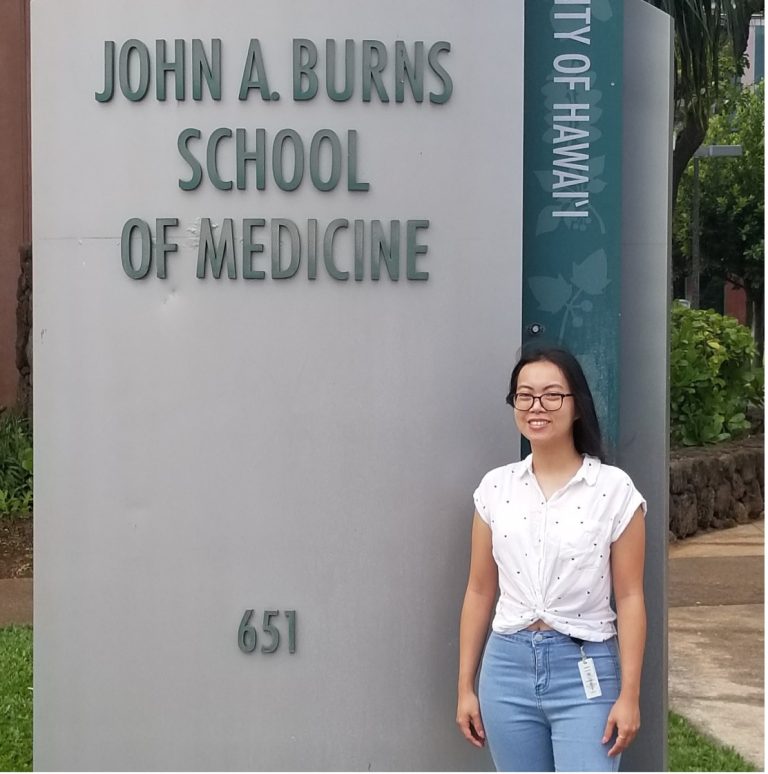
Cell and Molecular Biology Ph.D. Student Katie Lee was selected for the prestigious George Orton and Mona Marie Elmore Achievement Rewards for College Scientists (ARCS) Award in Medicine. This $5,000 award will be given in May 2022. The ARCS Scholar Award provides unrestricted grants to outstanding U.S. scholars in science, technology, engineering, mathematics, and health fields.
 Congratulations Katie Lee!
Cell and Molecular Biology Ph.D. Student Katie Lee was selected for the prestigious George Orton and Mona Marie Elmore Achievement Rewards for College Scientists (ARCS) Award in Medicine. This $5,000 award will be given in May 2022. The ARCS Scholar Award provides unrestricted grants to outstanding U.S. scholars in science, technology, engineering, mathematics, and health fields.
The non-profit ARCS Foundation Inc. comprises 15 chapters across the nation working to keep the United States competitive in STEM fields. Since its founding in 1974, the totally volunteer Honolulu Chapter has provided more than $2.3 million in unrestricted grants to 548 University of Hawaiʻi graduate students, providing annually a dozen $5,000 awards to students in the university’s Colleges of Natural Sciences, Engineering, and Tropical Agriculture; Schools of Medicine, Nursing and Ocean and Earth Sciences and Technology; and Institute of Astronomy. More at https://www.uhfoundation.org/impact/research/gift-endows-arcs-advancing-science-awards.
Katie Lee was born and raised in Hawaiʻi and has lived on this island her entire life. She developed an interest in science with encouragement from her parents and teachers that culminated in a B.S. degree in biochemistry at the University of Hawaiʻi at Mānoa. During her undergraduate studies, she was fortunate to be accepted into the CURE program at the Cancer Center which kicked off her career in research. She joined Dr. Peter Hoffmann’s laboratory to study melanoma and continued this with the INBRE program. After graduation, she was accepted into the Cell and Molecular Biology program at JABSOM as a Ph.D. student and immediately joined Dr. Ralph Shohet’s laboratory studying cardiovascular disease. Her thesis project examines cardiac metabolism using mice missing a key glycolytic enzyme that was shown to increase in expression after cardiac injury.